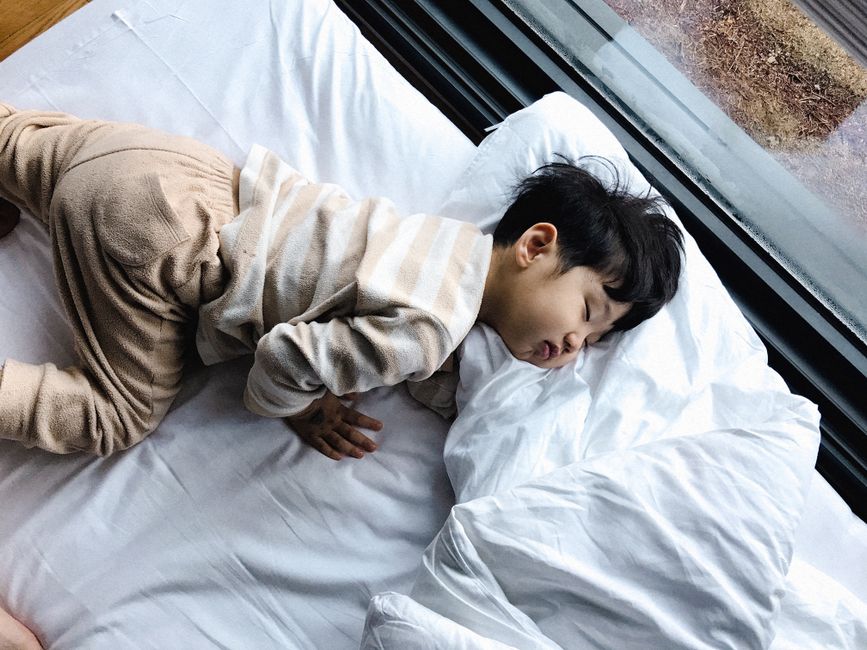
Seven hours. That's the minimum adults need each night for sustained cognitive function, according to the European Sleep Research Society — yet surveys across France consistently show that roughly a third of working-age adults fall short of it on weekdays. In a city like Nice, where the culture pushes hard toward outdoor living, late dinners and a social calendar that stretches well past 10 p.m., the gap between ambition and actual rest can be particularly stubborn.
Hormone research published earlier this year has thrown fresh attention on melatonin, cortisol and the body's internal thermostat as critical players in sleep onset. The takeaway for ordinary people is practical: what you do in the 90 minutes before getting into bed matters more than almost any other single factor. Light exposure, meal timing, screen use and even room temperature all send direct chemical signals that either accelerate or obstruct the brain's switch into sleep mode.
What the science actually recommends
The core finding from multiple European chronobiology studies is that the body needs a consistent, predictable drop in core temperature to trigger melatonin release — the hormone that signals true sleepiness. A body temperature reduction of roughly 0.5 to 1 degree Celsius in the hour before bed is associated with faster sleep onset and more consolidated deep sleep. Warm baths or showers taken 60 to 90 minutes before bed — not right before — cause the skin to radiate heat outward and actually accelerate that drop. This is not intuitive, but the physiology is solid.
Blue-light suppression from phone and laptop screens is by now familiar, but the specific window matters. Research from the Institut National du Sommeil et de la Vigilance, based in Paris and active since 2000, recommends dimming all screens to warm-tone settings or avoiding them entirely after 9 p.m. for anyone targeting a midnight bedtime. The INSV also notes that France's average sleep debt accumulates most sharply between Sunday and Thursday nights — the workweek compression effect — which makes a Monday-to-Friday wind-down routine more valuable than a weekend splurge-and-catch-up approach.
Meal timing is the factor Nice residents may need to take most seriously. A 9 p.m. dinner on the Cours Saleya is culturally normal here. Eating within two hours of sleep onset keeps the digestive system active, raises core temperature and suppresses melatonin. Nutritionists at Clinique Saint-George, on the Boulevard de Cimiez, routinely counsel patients to finish their evening meal by 8 p.m. where possible — or at minimum to keep late dinners light, avoiding heavy proteins and alcohol, which fragments sleep architecture even when it induces initial drowsiness.
Where to build the habit in Nice
Nice's wellness infrastructure has caught up with the science faster than many comparable French cities. The Studio Yoga Côte d'Azur, in the Carré d'Or neighbourhood near the Rue de la Buffa, runs a dedicated Nidra and restorative yoga session on Tuesday and Thursday evenings at 8:30 p.m., designed explicitly as a pre-sleep practice. Participants report the 45-minute session — priced at €18 per drop-in class as of June 2026 — leaves the nervous system in a measurably quieter state than a standard vinyasa flow. The format uses guided body scans and extended exhalation breathing, both of which activate the parasympathetic nervous system and lower resting heart rate.
For those who prefer water, the Bains de Mer de Nice on the Promenade des Anglais offers a thalassotherapy circuit that closes at 9 p.m. on weekdays. A 45-minute warm seawater immersion session, available from €32, delivers exactly the kind of peripheral vasodilation that sleep scientists recommend. The key is timing the exit: leaving around 8:15 p.m. means the body's cooling process peaks around 9:30 to 10 p.m., the biological sweet spot for sleep onset.
The practical framework, then, is fairly specific: dim lights and close screens by 9 p.m., finish eating by 8 p.m. where possible, introduce a thermal event — bath, shower or thalasso — 60 to 90 minutes before the intended sleep time, and treat the routine as non-negotiable on weeknights. Consistency of timing, sleep scientists emphasise, is as important as any single technique. A body that beds down at 11 p.m. every night adapts; one that lurches between midnight and 2 a.m. never quite does. Anyone experiencing persistent sleep difficulties should consult a médecin généraliste or a specialist at one of Nice's sleep clinics before self-prescribing supplements or making significant lifestyle changes.